 Edward Harrington
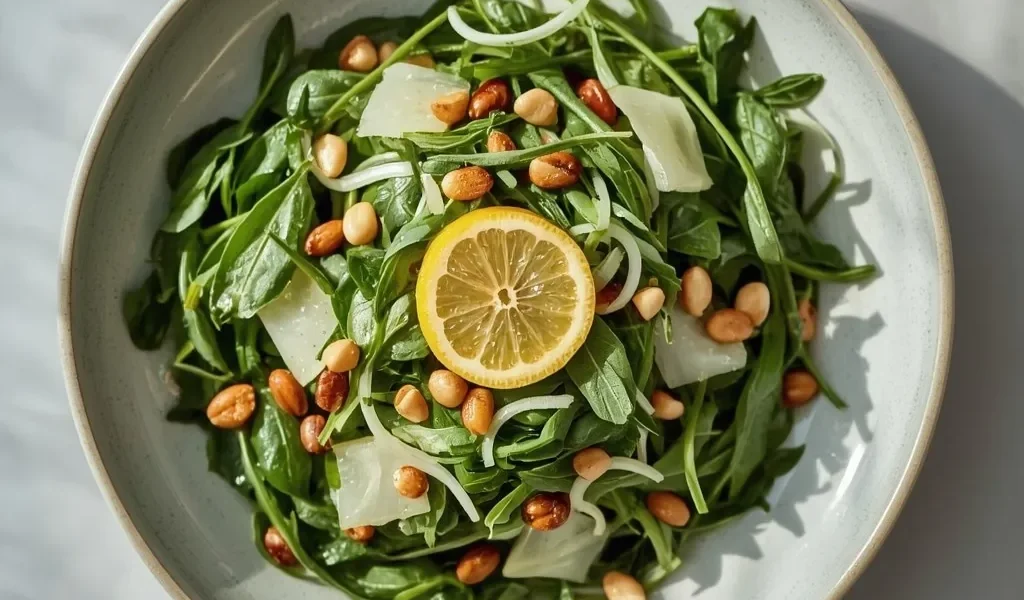
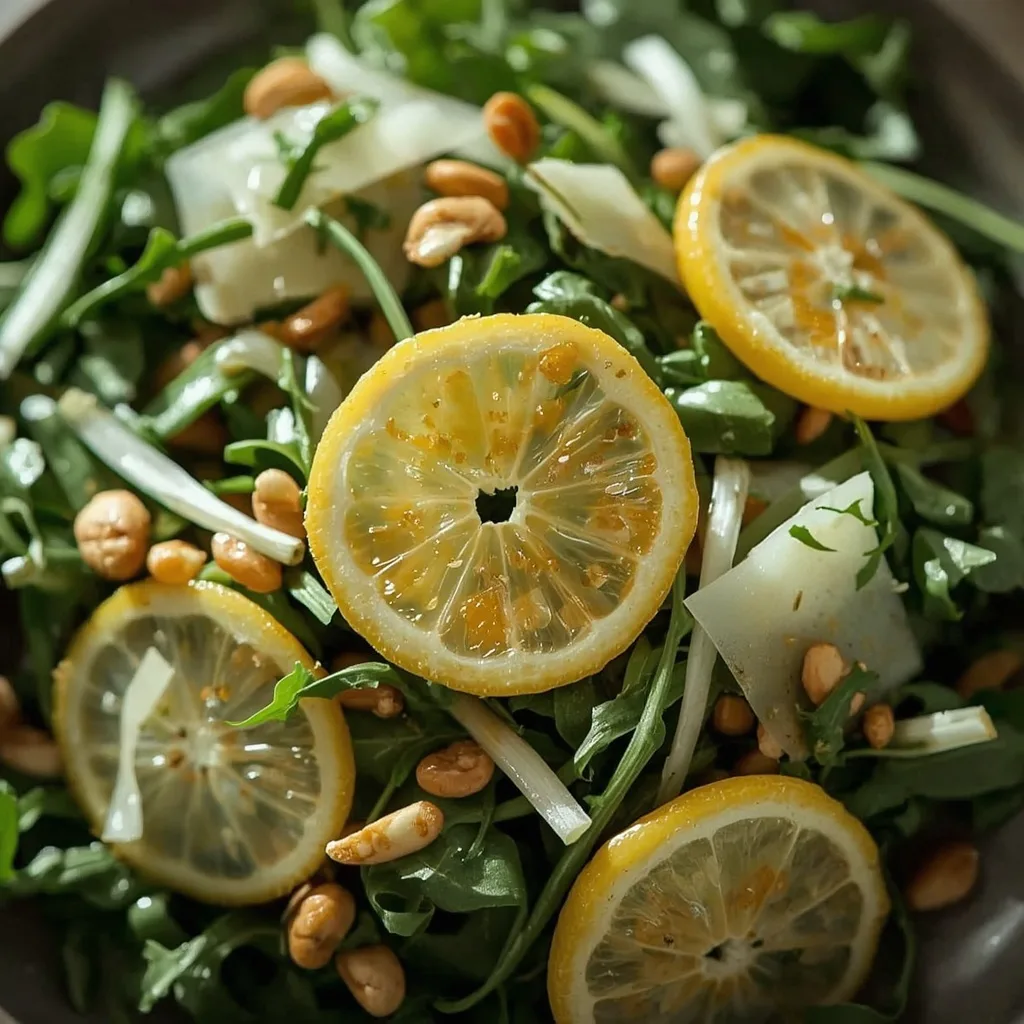
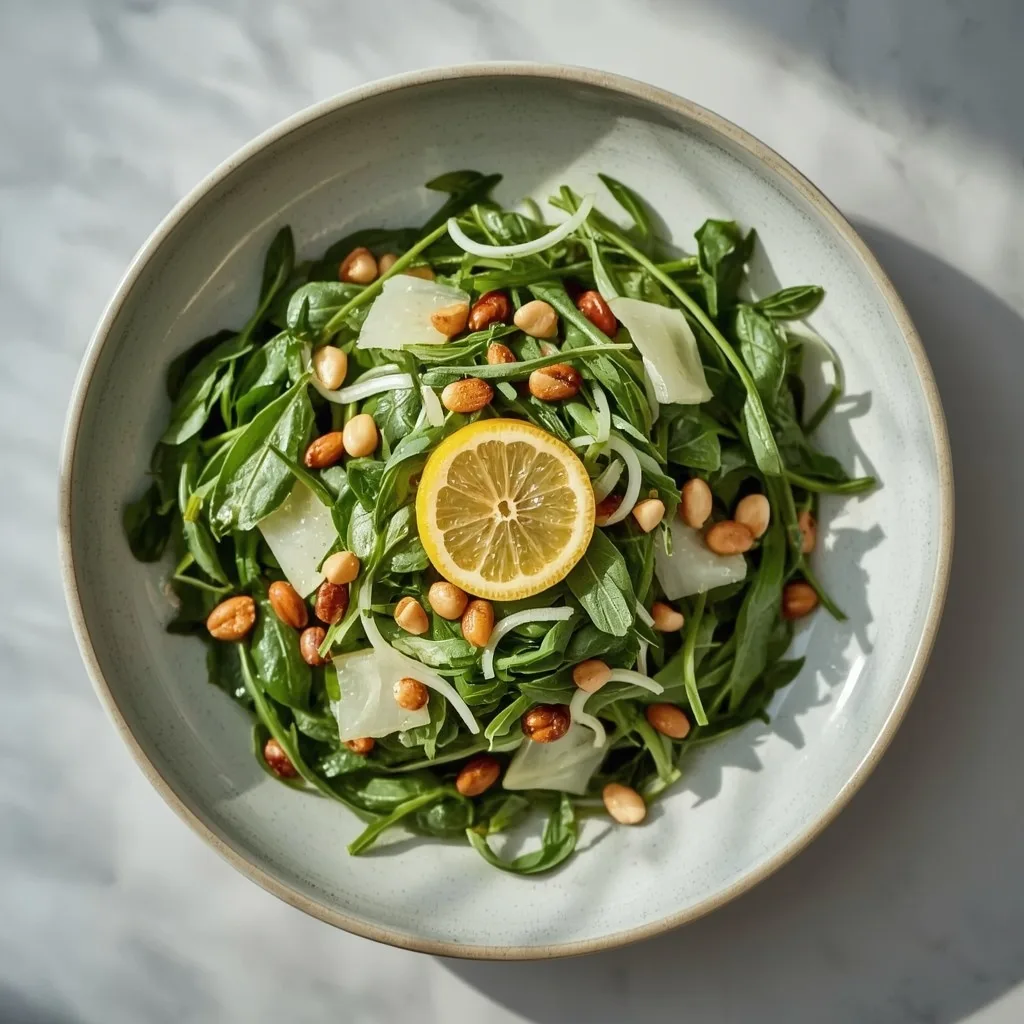
 The Giada Candied Lemon and Arugula Salad is a bright, peppery dish that balances sweet, tangy, and savory flavors in every bite. Thinly shaved fennel, toasted pine nuts, and shards of Parmigiano-Reggiano sit on a bed of baby arugula, all tied together with a tangy lemon vinaigrette and topped with chewy, sweet-tart candied lemon rind.
This recipe takes about 45 minutes total and is a solid intermediate-level project, mainly because of the candy step. The candied lemon rind requires a bit of patience on the stovetop, but the payoff is a unique, elegant salad that works perfectly as a refreshing starter or a light lunch.
What Is Giada Candied Lemon and Arugula Salad?
This is a composed Italian-American salad built on contrasting textures and flavors. You get spicy arugula, crunchy fennel and pine nuts, salty cheese, and a tangy vinaigrette, all topped with tender, sweet-tart strips of candied lemon rind. The dish is served immediately after dressing to keep the greens crisp, making it a fresh, vibrant choice for any meal.
Why This Recipe Works
- Bright citrus is the anchor — The candied lemon rind delivers a concentrated sweet-tart pop that cuts through the peppery arugula and rich cheese.
- Contrasting textures keep it interesting — Crunchy pine nuts meet soft, chewy candied zest, crisp fennel, and tender greens in every forkful.
- Dressing is emulsified for even coating — A touch of Dijon mustard helps the vinaigrette cling to every leaf without pooling at the bottom.
- Prep-ahead components make assembly fast — You can candy the lemon rind up to two days ahead, toast the pine nuts, and make the vinaigrette, then dress and garnish in under five minutes.
Ingredients You’ll Need
Here is everything you need to make this salad. All measurements match the recipe exactly.
For the Candied Lemon Rind
- 1 large organic lemon (preferably thin-skinned) — You use both the zest and the juice. Organic is important because you are eating the peel, and thin-skinned lemons have less bitter pith.
- 1/2 cup (100g) granulated sugar — Dissolves into a simple syrup that turns the zest tender and translucent.
- 1/2 cup (120ml) water — Creates the syrup base.
For the Salad Base
- 5 ounces (142g) baby arugula, washed and dried — The peppery, slightly bitter base of the salad. Dry it well — wet greens dilute the dressing.
- 1 small fennel bulb (about 8 oz / 225g), cored and very thinly sliced, fronds reserved for garnish — Adds a mild anise crunch. Save those fronds — they make a beautiful, flavorful garnish.
- 1/3 cup (45g) pine nuts, toasted — Toasted until golden and fragrant for a buttery crunch. They burn fast, so watch them closely.
- 1 ounce (28g) Parmigiano-Reggiano cheese, shaved with a vegetable peeler into thin curlicues — Salty, nutty shards that melt on the tongue. Use a block, not pre-grated.
For the Lemon Vinaigrette
- 3 tablespoons (45ml) extra-virgin olive oil — The base of the dressing. Use a good-quality one for the best flavor.
- 2 tablespoons (30ml) fresh lemon juice (from the candied lemon lemon, if desired, or a separate lemon) — You can use the lemon you zested for candying, or a fresh one.
- 1/2 teaspoon kosher salt — Seasons the greens and helps balance the sweet candy.
- 1/4 teaspoon freshly ground black pepper — Adds a touch of warmth and bite.
- 1/4 teaspoon Dijon mustard (optional, for emulsion) — Helps the oil and lemon juice emulsify into a creamy, clingy vinaigrette. Optional, but recommended.
Kitchen Tools You’ll Need
- Sharp vegetable peeler or small paring knife — For removing the lemon zest in long strips without too much white pith.
- Small saucepan — Used for both blanching the zest and making the sugar syrup.
- Slotted spoon or fork — To transfer the candied zest from the hot syrup to a cooling rack.
- Wire rack set over parchment paper — The candied zest needs air flow to dry completely; a flat plate will make it sticky.
- Large mixing bowl and tongs — For tossing the salad gently and evenly without bruising the arugula.
How to Make Giada Candied Lemon and Arugula Salad
This recipe has a few steps, but each one is straightforward. Here is the full process broken down into clear actions.
- Prepare the zest — Use a sharp peeler to remove the bright yellow zest in long strips, avoiding the white pith. Slice the strips lengthwise into very thin julienne, no wider than 1/8 inch (3 mm). Reserve the peeled lemon for juicing.
- Blanch the zest — Boil a small saucepan of water. Add the julienned zest and blanch for exactly 1 minute to remove bitterness and soften the rind. Drain and rinse under cold water immediately to stop the cooking.
- Make the sugar syrup — In the same saucepan, combine the sugar and water. Stir over medium heat until the sugar dissolves completely, about 2 minutes. Bring to a gentle boil, then reduce the heat to low to maintain a bare simmer.
- Candy the zest — Add the blanched zest to the simmering syrup. Cook, stirring occasionally, for 12-15 minutes, until the zest turns translucent and tender. The syrup will thicken slightly. Use a slotted spoon to transfer the candied zest to a wire rack set over parchment paper. Let it cool and dry for at least 10 minutes. (Make this up to 2 days ahead and store airtight at room temperature.)
- Make the vinaigrette — In a small bowl, combine the lemon juice, salt, pepper, and Dijon mustard (if using). Whisk together. Slowly drizzle in the olive oil while whisking constantly until emulsified and slightly thickened. Set aside.
- Toast the pine nuts — In a dry small skillet over medium heat, toast the pine nuts, shaking often, until golden and fragrant, about 2-3 minutes. They burn fast, so watch closely. Transfer to a plate to cool immediately.
- Toss the salad — In a large mixing bowl, combine the arugula, thinly sliced fennel, and cooled pine nuts. Drizzle about two-thirds of the vinaigrette over the greens. Gently toss with tongs or clean hands until evenly coated. Add more vinaigrette if needed — leaves should glisten, not pool.
- Plate and garnish — Divide the dressed salad among four chilled plates. Scatter the candied lemon zest evenly over each serving. Top with shaved Parmigiano-Reggiano curls and a few reserved fennel fronds. Serve immediately, passing any remaining vinaigrette at the table.
Common Mistakes to Avoid (And How to Fix Them)
- Bitter candied zest — If you skip the blanching step or leave too much white pith, the zest will be bitter. Fix: Always blanch for a full minute, and use a thin-skinned lemon to minimize pith.
- Burnt pine nuts — Pine nuts go from golden to black in seconds. Fix: Watch them constantly, shake the pan often, and transfer them to a cool plate immediately once they smell fragrant.
- Soggy arugula — Wet greens won’t hold the dressing and turn limp. Fix: Wash and dry the arugula thoroughly in a salad spinner or with paper towels before tossing.
- Over-dressed salad — Too much vinaigrette drowns the greens and makes the dish heavy. Fix: Start with two-thirds of the dressing, toss, then add more only as needed. Each leaf should be lightly glistening, not wet.
- Sticky candied zest — If you skip the cooling step or pile the hot zest on a flat surface, it will clump together. Fix: Spread the zest out on a wire rack so air circulates around each strip, and let it dry for the full 10 minutes.
Helpful Tips for Perfect Giada Candied Lemon and Arugula Salad
- Thin-skinned lemons are key — They have less bitter pith, so your candied zest stays sweet and tender rather than harsh and chewy. Organic is a must since you are eating the peel.
- Make the candied zest ahead of time — It keeps well in an airtight container at room temperature for up to one week. Doing it a day ahead reduces last-minute stress and lets you focus on assembly.
- Toast pine nuts in a dry pan — No oil needed. The natural oils in the nuts release as they heat up, giving you a toasty, buttery flavor without added fat.
- Use a sharp vegetable peeler for the cheese — Shaving Parmigiano-Reggiano into thin curlicues creates delicate, airy shards that melt on the tongue. A cheese grater will give you dense shreds instead.
- Chill your salad plates — A cold plate helps keep the greens crisp and the dressing emulsified, especially if you are serving this on a warm day.
- Reserve the fennel fronds — They look like delicate dill and taste mildly of anise. A few fronds scattered on top add a beautiful, edible garnish that echoes the fennel in the salad.
- Dress the salad at the last minute — Arugula wilts quickly once coated. Toss and serve immediately for the best texture. If preparing components ahead, keep everything separate until you are ready to eat.
Easy Ingredient Substitutions for Giada Candied Lemon and Arugula Salad
- Arugula → baby spinach or mixed greens — Spinach is milder and less peppery. Use it if you prefer a gentler base, or a mix of greens for more variety.
- Pine nuts → sliced almonds or walnuts — Toast almonds until golden for a similar crunch, or use raw walnut pieces for a deeper, earthier flavor. Watch the timing — almonds take a minute longer, walnuts toast fast.
- Parmigiano-Reggiano → Pecorino Romano or Grana Padano — Pecorino is saltier and sharper; Grana Padano is milder and creamier. Both shave beautifully. Adjust salt in the dressing if using Pecorino.
- Fennel bulb → thinly sliced celery or endive — Celery adds a similar crunch and mild freshness. Endive brings a slight bitterness that plays well with the arugula.
- Dijon mustard → honey or maple syrup — If you skip the mustard, the vinaigrette won’t emulsify as well, but a tiny drizzle of honey adds sweetness and helps the dressing cling. Use about 1/4 teaspoon.
Easy Ways to Customize Giada Candied Lemon and Arugula Salad
- Add protein for a main dish — Grilled chicken, seared shrimp, or flaked salmon turn this into a satisfying lunch or light dinner. Add it right before serving.
- Include fresh fruit — Sliced ripe pears, segmented oranges, or halved grapes add sweetness and juiciness that complement the candied lemon. Toss them in with the greens.
- Swap the cheese for a vegan option — Use store-bought vegan Parmesan or shaved almonds tossed in nutritional yeast for a similar salty, nutty finish.
- Add a grain for heartiness — Cooked quinoa, farro, or wild rice adds bulk and makes the salad more filling. Let the grain cool completely before tossing.
- Use a different citrus — Thin-skinned blood oranges or Meyer lemons work beautifully for the candied zest. Adjust the vinaigrette juice to match the fruit you use.
- Make it a warm salad — Lightly sauté the fennel slices in a splash of olive oil for about 2 minutes until just softened, then let them cool slightly and toss with the arugula. The warmth wilts the greens just a touch.
Best Ways to Store Giada Candied Lemon and Arugula Salad
- Undressed greens (short-term) — Store the arugula and sliced fennel in a sealed bag with a paper towel in the fridge for up to 2 days. The towel absorbs moisture and keeps the greens crisp.
- Candied lemon zest (long-term) — Keep in an airtight container at room temperature for up to 1 week. Do not refrigerate — moisture will make it sticky.
- Lemon vinaigrette (long-term) — Pour into a jar with a tight lid and store in the fridge for up to 1 week. Shake or whisk well before using, as the oil will separate when chilled.
- Leftover dressed salad (not ideal) — Store in an airtight container in the fridge for up to 1 day, but expect the arugula to be wilted. To refresh, let it sit at room temperature for 10 minutes, then add a squeeze of fresh lemon and a pinch of salt.
Best Ways to Reheat Leftovers
This salad is best served fresh and cold, but if you have leftover dressed salad, here is how to handle it.
- Room temperature refresh — Let the salad sit out for 10 minutes to take the chill off. Add a squeeze of fresh lemon, a pinch of salt, and toss gently. This revives the flavor but won’t restore crispness.
- Use leftover components separately — If you have undressed greens and candied zest, do not reheat the greens. Instead, warm the vinaigrette gently in a small saucepan over low heat for about 30 seconds (just to take the edge off), then dress fresh greens.
- Do not microwave — Microwaving dressed arugula turns it into a soggy, bitter mess. If you must reheat, sauté undressed greens in a hot pan with a splash of olive oil for 30 seconds, then add the vinaigrette off the heat.
Nutritional Breakdown (per serving)
Based on 1 serving = 1 portion out of 4 total.
- Calories: 225
- Protein: 6g
- Fat: 16g
- Carbohydrates: 18g
- Fiber: 2g
- Sugar: 15g
- Sodium: 380mg
FAQs
Can I freeze Giada Candied Lemon and Arugula Salad?
No, do not freeze this salad. The arugula will turn into a watery, limp mess, and the candied lemon zest will become sticky and clump together when thawed. This dish is designed to be eaten fresh.
How long does Giada Candied Lemon and Arugula Salad last in the fridge?
Undressed components last separately for up to 2 days (greens) and 1 week (zest and vinaigrette). Once dressed, eat it immediately. Dressed leftovers will be wilted after about an hour in the fridge.
Can I use bottled lemon juice for the vinaigrette?
Fresh lemon juice is strongly recommended. Bottled juice has a flat, metallic taste that dulls the bright citrus flavor of this salad. Use the same lemon you zested for candying, if possible.
Do I have to blanch the lemon zest before candying?
Yes, absolutely. The 1-minute blanch removes the bitterness from the lemon peel. Skipping it will give you bitter, unpleasant candied zest that ruins the dish.
Can I make the candied lemon zest without sugar?
No, sugar is essential for the candying process. It draws out moisture and creates the tender, translucent texture. A sugar substitute like stevia will not work because it does not provide the same physical reaction.
Is this salad gluten-free?
Yes, as written, this salad is naturally gluten-free. All ingredients — arugula, fennel, pine nuts, Parmigiano-Reggiano, olive oil, lemon juice, and sugar — are gluten-free. Just double-check your Dijon mustard if using, as some brands contain gluten.
Wrapping Up
This Giada Candied Lemon and Arugula Salad is one of those dishes that feels special but is surprisingly simple to put together once you understand the candy step. The sweet-tart lemon strips add a texture and flavor you won’t find in any other salad.
Give it a try the next time you want something bright and elegant — your dinner guests will ask for the recipe. And if you make the candied zest ahead, you can have this on the table in under 10 minutes.
PrintGiada Candied Lemon and Arugula Salad
A vibrant, peppery arugula salad brightened by thinly shaved fennel, toasted pine nuts, and shards of salty Parmigiano-Reggiano, all tied together with a tangy lemon vinaigrette. The star is the candied lemon rind—tender, sweet-tart slivers that add a burst of citrus and a delightful chewy texture. Perfect as a refreshing starter or light lunch.
- Prep Time: 25
- Cook Time: 20
- Total Time: 45
- Yield: 4 1x
- Category: Salad
- Method: Stovetop
- Cuisine: Italian-American
Ingredients
- 1 large organic lemon (preferably thin-skinned)
- 1/2 cup (100g) granulated sugar
- 1/2 cup (120ml) water
- 5 ounces (142g) baby arugula, washed and dried
- 1 small fennel bulb (about 8 oz / 225g), cored and very thinly sliced, fronds reserved for garnish
- 1/3 cup (45g) pine nuts, toasted in a dry skillet over medium heat until golden and fragrant, about 2-3 minutes
- 1 ounce (28g) Parmigiano-Reggiano cheese, shaved with a vegetable peeler into thin curlicues
- 3 tablespoons (45ml) extra-virgin olive oil
- 2 tablespoons (30ml) fresh lemon juice (from the candied lemon lemon, if desired, or a separate lemon)
- 1/2 teaspoon kosher salt
- 1/4 teaspoon freshly ground black pepper
- 1/4 teaspoon Dijon mustard (optional, for emulsion)
Instructions
- Start by preparing the candied lemon rind. Using a sharp vegetable peeler or a small paring knife, remove the bright yellow zest from the lemon in long strips, taking care to avoid the bitter white pith as much as possible. You should have about 8-10 strips. Slice the strips lengthwise into very thin julienne, no wider than 1/8 inch (3 mm). Reserve the peeled lemon for juicing.
- Bring a small saucepan of water to a boil over high heat. Add the julienned lemon zest and blanch for 1 minute—this removes bitterness and softens the rind. Drain immediately and rinse under cold running water to stop the cooking. Set aside.
- In the same saucepan, combine 1/2 cup (100g) granulated sugar and 1/2 cup (120ml) water. Stir gently over medium heat until the sugar completely dissolves, about 2 minutes. Bring the syrup to a gentle boil, then reduce heat to low to maintain a bare simmer.
- Add the blanched lemon zest strips to the simmering syrup. Cook, stirring occasionally, for 12-15 minutes, until the zest becomes translucent and tender. The syrup will thicken slightly. Remove the pan from heat. Using a slotted spoon or fork, transfer the candied zest to a wire rack set over a sheet of parchment paper. Allow to cool and dry for at least 10 minutes. (The candied zest can be made up to 2 days ahead and stored airtight at room temperature.)
- While the zest cools, prepare the vinaigrette. In a small bowl, combine 2 tablespoons (30ml) fresh lemon juice, 1/2 teaspoon kosher salt, 1/4 teaspoon black pepper, and 1/4 teaspoon Dijon mustard (if using). Whisk together. Slowly drizzle in 3 tablespoons (45ml) extra-virgin olive oil while whisking constantly until emulsified and slightly thickened. Set aside.
- Toast the pine nuts in a dry small skillet over medium heat, shaking often, until they are fragrant and golden in spots, about 2-3 minutes. Watch closely—pine nuts burn quickly. Immediately transfer to a plate to cool.
- In a large mixing bowl, place the washed and dried arugula, the very thinly sliced fennel, and the cooled toasted pine nuts. Drizzle about two-thirds of the vinaigrette over the greens. Using tongs or your clean hands, gently toss until all leaves are evenly coated. Add more vinaigrette if needed; you want each leaf lightly glistening, not drowning.
- Divide the dressed salad among four chilled salad plates. Scatter the candied lemon zest strips evenly over each serving. Top with shaved Parmigiano-Reggiano curls and a few reserved fennel fronds for garnish. Serve immediately, passing any remaining vinaigrette at the table.
- For best texture, dress the salad just before serving to keep the arugula crisp. If preparing components ahead, store undressed greens, vinaigrette, and toppings separately in the refrigerator, then assemble at the last minute.
Notes
Storage: This salad is best eaten immediately after dressing. If you have leftovers (unlikely), store undressed components separately: arugula and fennel in a sealed bag with a paper towel in the fridge for up to 2 days; candied lemon zest in an airtight container at room temperature for up to 1 week; vinaigrette in a jar in the fridge for up to 1 week. To refresh leftover dressed salad (not ideal), let sit at room temp for 10 minutes, then add a squeeze of fresh lemon and a pinch of salt. Do not freeze.
Nutrition
- Calories: 225
- Sugar: 15g
- Sodium: 380mg
- Saturated Fat: 3g
- Carbohydrates: 18g
- Fiber: 2g
- Protein: 6g
- Cholesterol: 8mg
Keywords: candied lemon and arugula salad, giada salad, arugula salad recipe, candied lemon recipe, fennel salad, lemon vinaigrette, Italian salad, Parmigiano-Reggiano, pine nuts, easy salad, light lunch, spring salad