
 Edward Harrington
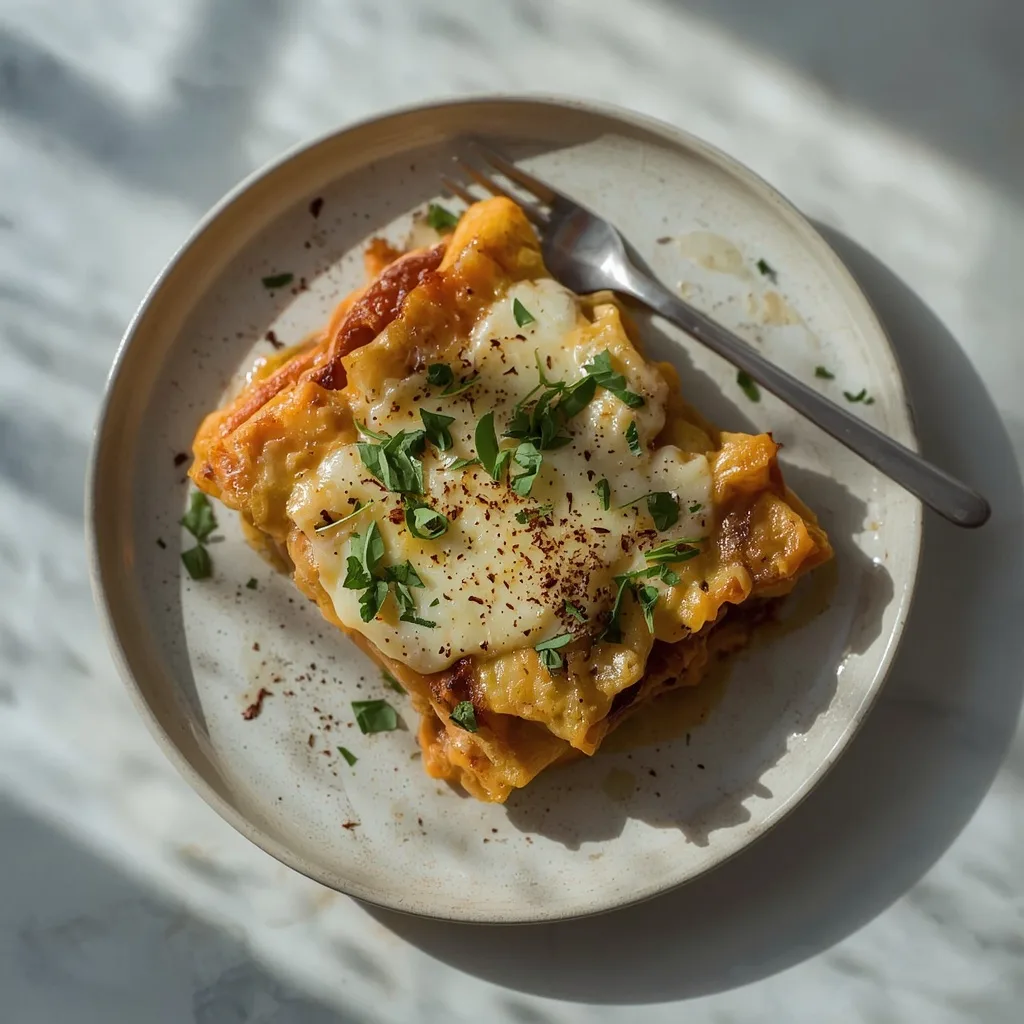
 Giada Butternut Squash Lasagna layers tender roasted squash with creamy béchamel and three cheeses for a rich, comforting main dish. The natural sweetness of the squash pairs beautifully with nutty Parmesan and earthy sage, creating a vegetarian centerpiece worthy of any holiday table.
Total time is about 85 minutes — 30 minutes of prep and 55 minutes of baking. This is an intermediate-level recipe thanks to the béchamel and layering, but the steps are straightforward. It works perfectly for Thanksgiving, Christmas dinners, or a special Sunday meal when you want something impressive without a ton of fuss.
What Is Giada Butternut Squash Lasagna?
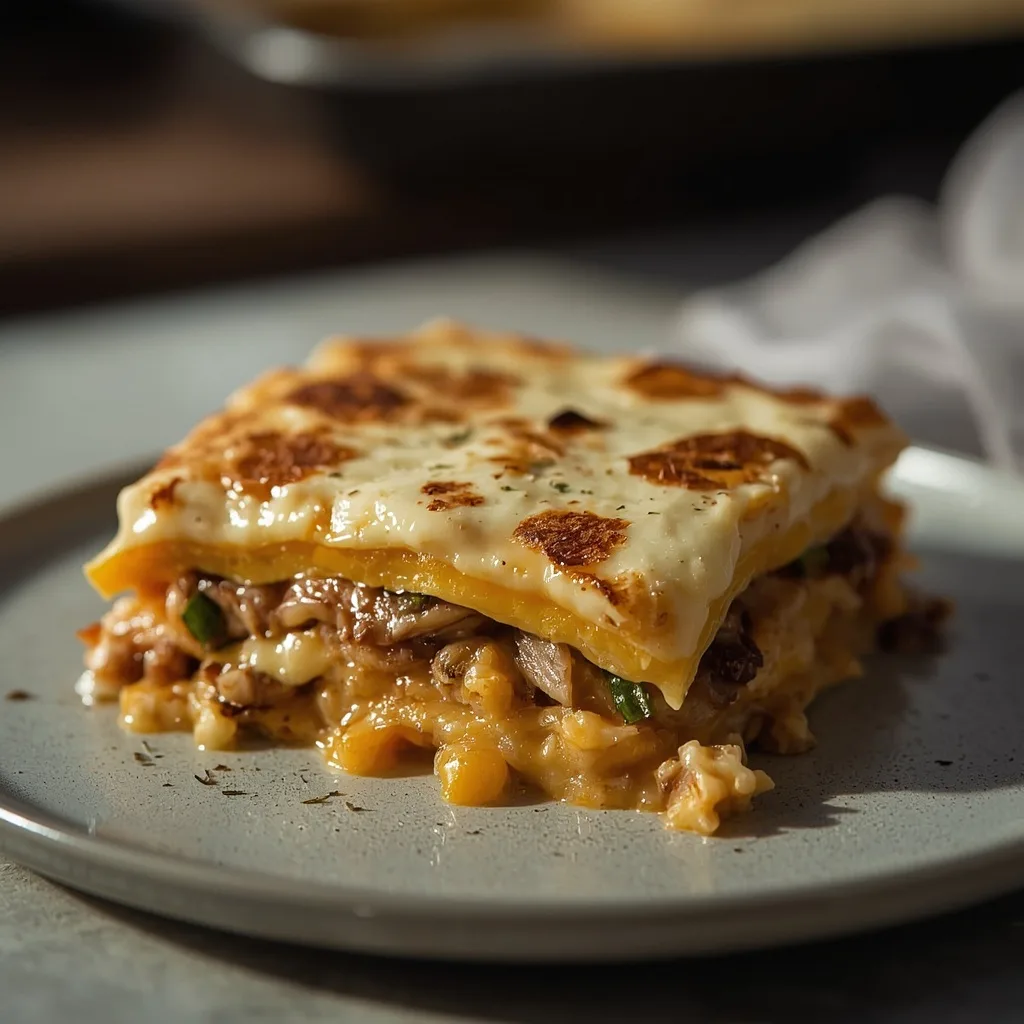
This dish swaps traditional beef or marinara for roasted butternut squash, a creamy béchamel sauce, and a trio of ricotta, mozzarella, and Parmesan. The no-boil noodles simplify assembly, and the sage adds an earthy warmth that ties everything together. The texture is tender and creamy with lightly browned, bubbly cheese on top. It is an Italian-American vegetarian main that feels indulgent but relies on vegetables for much of its depth.
Why This Recipe Works
- No-boil noodles save time — They soften perfectly during baking, so you skip the extra pot and draining step entirely.
- Roasted squash adds natural sweetness — The high heat caramelizes the cubes, giving the lasagna a rich sweetness without any added sugar.
- Béchamel keeps every bite creamy — Unlike tomato-based sauces that can taste acidic here, the milk-based béchamel coats the noodles and squash in a silky, even layer.
- Three cheeses build layered flavor — Ricotta adds creaminess, mozzarella brings the stretch, and Parmesan delivers a salty, nutty finish that balances the sweet squash.
- The covered bake steams the noodles tender — Foil trapping the steam ensures the no-boil sheets cook through without a single hard or crunchy spot.
Ingredients You’ll Need
Here is exactly what goes into this lasagna. Measure everything before you start — it makes assembly much smoother.
The Squash Layer
- 1 medium butternut squash (about 2 lb / 907g) — Peeled, seeded, and cut into ½-inch cubes (roughly 3 cups). Look for a squash with a long neck — it is easier to peel and has fewer seeds.
- 2 tablespoons olive oil — Helps the squash roast evenly and adds a subtle fruity note.
- 1 teaspoon kosher salt, divided — Half goes on the squash before roasting, the other half seasons the béchamel.
- ½ teaspoon black pepper, divided — Same split as the salt, half for the squash and half for the sauce.
- 1 small yellow onion, finely diced (about ½ cup) — Adds savory depth when sautéed with the garlic and sage.
- 2 cloves garlic, minced — Cooks just until fragrant — about 30 seconds — so it does not burn.
- 2 tablespoons chopped fresh sage (or 1 teaspoon dried rubbed sage) — Fresh sage gives a milder, earthier flavor; dried is more concentrated, so use less.
The Béchamel Sauce
- 3 tablespoons unsalted butter — The base of the roux. Use unsalted so you control the final salt level.
- 3 tablespoons all-purpose flour — Thickens the milk into a smooth, pourable sauce.
- 2 cups whole milk — Whole milk gives the creamiest result. Lower-fat milk will work but the sauce will be thinner.
- ¼ teaspoon ground nutmeg — Just a pinch — it brightens the béchamel without overpowering it.
The Noodles and Cheese
- 6 sheets no-boil lasagna noodles (about 4 oz / 113g) — These soften as they bake. Do not substitute regular noodles unless you boil them first.
- 1½ cups (12 oz / 340g) whole-milk ricotta cheese — Full-fat ricotta stays creamy. Part-skim can turn grainy when baked.
- 1½ cups (6 oz / 170g) shredded whole-milk mozzarella cheese — Pre-shredded is fine, but block mozzarella you shred yourself melts more evenly.
- ½ cup (2 oz / 57g) grated Parmesan cheese — Use real Parmesan (Parmigiano-Reggiano if you can). The pre-grated stuff in a can does not melt the same way.
Kitchen Tools You’ll Need
- 8×8-inch baking dish — The exact size matters here. A 9×13 dish will spread the layers too thin and throw off the noodle count.
- Rimmed baking sheet — Holds the squash in a single layer for even roasting and catches any drips from the lasagna during baking.
- Medium saucepan — For the béchamel. A heavy-bottomed pan helps the milk heat evenly without scorching.
- Small skillet — For sautéing the onion, garlic, and sage. A nonstick or stainless pan both work fine.
- Aluminum foil and nonstick cooking spray — Spray the foil so the cheese does not stick to it during the covered bake. That prevents a torn crust when you pull the foil off.
How to Make Giada Butternut Squash Lasagna
The process breaks into four simple stages: roast the squash, make the béchamel, sauté the aromatics, then layer and bake. Here is how each step goes.
- Roast the Squash — Toss the cubed squash with olive oil, ½ teaspoon salt, and ¼ teaspoon pepper. Spread in a single layer on a parchment-lined sheet and roast at 400°F for 20-25 minutes, stirring halfway, until tender and lightly browned at the edges. Remove and set aside. Lower the oven to 375°F for baking.
- Make the Béchamel — In a medium saucepan over medium heat, melt the butter until it foams and then subsides. Add the flour and whisk constantly for 1 minute to cook off the raw taste. Gradually whisk in the milk, about ½ cup at a time, making sure each addition is fully incorporated before adding the next. Bring to a gentle simmer, whisking often, until the sauce coats the back of a spoon — about 3-4 minutes. Remove from heat and stir in the nutmeg, remaining ½ teaspoon salt, and remaining ¼ teaspoon pepper.
- Sauté the Aromatics — In a small skillet over medium heat, heat a drizzle of olive oil. Add the diced onion and cook until translucent, about 4 minutes, stirring occasionally. Add the garlic and chopped sage and cook until fragrant, about 30 seconds. Stir this mixture into the roasted squash cubes.
- Assemble the Lasagna — Spread a thin layer of béchamel (about ¼ cup) on the bottom of an 8×8-inch baking dish. Place 2 lasagna sheets side by side, breaking to fit if needed. Spread half of the squash-onion mixture over the noodles, then dollop half of the ricotta and gently spread it even. Sprinkle with one-third of the mozzarella and one-third of the Parmesan. Repeat the layers: 2 noodles, remaining squash mixture, remaining ricotta, another third of mozzarella and Parmesan.
- Top and Cover — Place the final 2 noodles on top. Pour the remaining béchamel over the noodles, spreading to the edges with a spatula. Sprinkle the remaining mozzarella and Parmesan evenly over the top. Cover tightly with foil that has been sprayed with nonstick cooking spray. Set the dish on a rimmed baking sheet to catch drips.
- Bake and Rest — Bake covered at 375°F for 25 minutes. Remove the foil and bake for another 10-15 minutes, until the cheese is melted and bubbly and the edges are golden brown. Let the lasagna rest on a wire rack for 10-15 minutes before slicing — this allows the layers to set so you get clean squares instead of a saucy mess.
Common Mistakes to Avoid (And How to Fix Them)
- Skipping the foil spray — The cheese will stick to the foil and pull off the top crust when you lift it. Spray the foil with nonstick spray before covering, or use parchment paper between the foil and the cheese.
- Overcooking the béchamel — If the sauce gets too thick, it will not spread easily between layers. Whisk in a splash of warm milk to loosen it back to a pourable consistency.
- Not resting the lasagna before slicing — Cutting into it right out of the oven causes the layers to slide apart. A 10-15 minute rest on a wire rack gives the structure time to firm up.
- Using a dish that is too large — A 9×13 pan spreads the noodles and filling too thin, leaving you with dry edges and uneven layers. Stick to an 8×8-inch dish for the proportions to work.
- Forgetting to stir the squash halfway through roasting — The cubes on the edges will burn while the center ones stay pale. Stir at the 12-minute mark for even browning.
Helpful Tips for Perfect Giada Butternut Squash Lasagna
- Cut the squash into uniform ½-inch cubes — Pieces that are the same size roast evenly. If some are larger, they will be hard in the center while smaller ones turn to mush.
- Use whole milk for the béchamel — Skim or 2% milk produces a thinner sauce that can break under high heat. Whole milk gives the creamy texture this dish needs.
- Let the béchamel cool slightly before layering — A hot sauce can start cooking the ricotta and noodles during assembly, leading to uneven texture. A 5-minute rest off the heat is enough.
- Spread the ricotta gently rather than pressing it flat — Pressing too hard pushes it into the noodle layer below and creates a dense, pasty center. Dollop and nudge it into an even layer with the back of a spoon.
- Cover the dish tightly with foil — Any gaps let steam escape, and the noodles on top will stay crunchy. Crimp the foil around all four edges of the dish.
- Rest the lasagna on a wire rack — A rack lifts the dish off the counter so air circulates underneath. That prevents the bottom from steaming and getting soggy while it sets.
Easy Ingredient Substitutions for Giada Butternut Squash Lasagna
- Butternut squash → sweet potato or kabocha squash — Both roast to a similar creamy texture. Kabocha is denser and slightly sweeter; sweet potato adds more moisture, so drain any excess liquid after roasting.
- Whole milk → 2% milk plus 1 tablespoon heavy cream — If you only have lower-fat milk, adding a splash of cream restores enough richness for the béchamel to work properly.
- Ricotta → cottage cheese (blended smooth) — Pulse full-fat cottage cheese in a food processor until creamy. It has a similar texture but a slightly tangier flavor.
- Fresh sage → ½ teaspoon dried thyme or rosemary — Both herbs complement squash well. Use dried herbs sparingly — they are more concentrated than fresh.
- No-boil noodles → regular lasagna noodles boiled 2 minutes less than package directions — They will finish cooking in the oven. Drain well and pat dry before layering so they do not add extra water.
Easy Ways to Customize Giada Butternut Squash Lasagna
- Add cooked spinach or kale — Wilt 3 cups of fresh spinach in the skillet after the onion, squeeze out the excess moisture, and layer it with the squash. It adds color and an extra vegetable serving.
- Include a layer of caramelized mushrooms — Sauté 8 oz of sliced cremini mushrooms until golden and stir them into the squash mixture. Their umami flavor balances the sweetness of the squash.
- Swap the sage for rosemary and thyme — Use 1 teaspoon each of fresh rosemary and thyme instead of sage for a more piney, herbal profile that still pairs well with butternut squash.
- Add a pinch of red pepper flakes — Stir ¼ teaspoon of red pepper flakes into the béchamel for a gentle heat that cuts through the richness. It does not make the dish spicy, just more balanced.
- Use a blend of Gruyère and Parmesan on top — Replace half the mozzarella with shredded Gruyère. It melts beautifully and adds a nutty, slightly salty flavor that complements the béchamel.
Best Ways to Store Giada Butternut Squash Lasagna
- Refrigerator in an airtight container — Transfer cooled leftovers to a container with a tight lid. It stays fresh for up to 4 days. Place a piece of parchment paper directly on the surface to prevent a skin from forming.
- Freezer (unbaked) — Assemble the lasagna completely in the baking dish, but do not bake. Cover tightly with plastic wrap, then a layer of foil. Freeze for up to 3 months. Thaw overnight in the refrigerator before baking, then add 10-15 minutes to the covered bake time.
- Freezer (baked) — Bake and cool the lasagna completely, then wrap the whole dish in plastic wrap and foil. Freeze for up to 3 months. Thaw overnight in the fridge and reheat in a 350°F oven for 20-25 minutes, covered.
- Individual portions in freezer-safe containers — Slice the cooled lasagna into single servings and wrap each piece tightly in plastic wrap, then foil. They thaw faster and reheat in the microwave in about 2 minutes.
Best Ways to Reheat Leftovers
- Oven at 350°F (177°C) — Place a slice on a foil-lined baking sheet, cover loosely with foil, and heat for 12-15 minutes. The foil keeps the top from browning too much while the center warms through.
- Microwave on high — Place a slice on a microwave-safe plate and heat for 1 minute, then in 30-second bursts until hot. Cover with a damp paper towel to add moisture so the noodles do not dry out.
- Air fryer at 325°F (163°C) — Heat a single slice for 5-7 minutes. The air fryer re-crisps the cheese edges better than the oven or microwave, giving you a texture closer to fresh-baked.
- Stovetop in a covered skillet — Add a splash of milk or water to a nonstick skillet, place the slice in, cover, and warm over low heat for 5-7 minutes. The steam rehydrates the noodles without making them soggy.
Nutritional Breakdown (per serving)
Based on 1 serving = 1 portion out of 4 total.
- Calories: 729
- Protein: about 36g
- Fat: 45g
- Carbohydrates: around 53g
- Fiber: 3g
- Sugar: 11g
- Sodium: roughly 1014mg
FAQs
Can I freeze Giada Butternut Squash Lasagna?
Yes. Assemble the lasagna completely but skip the baking step. Cover tight with plastic wrap then foil and freeze for up to 3 months. Thaw overnight in the refrigerator and bake as directed, adding 10-15 minutes to the covered bake time.
How long does Giada Butternut Squash Lasagna last in the fridge?
It stays fresh for up to 4 days when stored in an airtight container. Place a piece of parchment paper directly on the surface to keep the top from drying out.
Can I use regular lasagna noodles instead of no-boil?
Yes. Boil regular noodles for 2 minutes less than the package directs — they will finish cooking in the oven. Drain well and pat them dry before layering so they do not add extra water to the dish.
Do I have to peel the butternut squash?
Yes. The skin is tough and does not soften during roasting. Use a sharp vegetable peeler or a chef’s knife to remove it completely before cubing the squash.
Can I make this lasagna ahead of time?
Absolutely. Assemble the lasagna a day ahead, cover it tight with foil, and refrigerate. When you are ready to bake, let it sit at room temperature for 20 minutes, then bake as directed. You might need to add 5 minutes to the covered bake time because the dish starts cold.
What can I use instead of béchamel?
A quick Alfredo sauce works as a substitute. Melt 2 tablespoons butter with 1 cup heavy cream, whisk in ½ cup grated Parmesan, and season with salt and pepper. It is richer and less traditional but still creamy enough for the layers.
Wrapping Up
This Giada Butternut Squash Lasagna delivers the comfort of a classic lasagna with a vegetable-forward twist that feels special without being fussy. The roasted squash, creamy béchamel, and three cheeses come together in a dish that holds its own at a holiday table or a casual weekend dinner. Give it a try — the layers are worth every minute.
PrintGiada Butternut Squash Lasagna
This butternut squash lasagna layers tender roasted squash with creamy béchamel and three cheeses for a rich, comforting main dish. The natural sweetness of the squash pairs beautifully with nutty Parmesan and earthy sage, creating a vegetarian centerpiece worthy of any holiday table.
- Prep Time: 30
- Cook Time: 55
- Total Time: 85
- Yield: 4 1x
- Category: Main Course
- Method: Baking
- Cuisine: Italian-American
Ingredients
- 1 medium butternut squash (about 2 lb / 907g), peeled, seeded, and cut into 1/2-inch cubes (about 3 cups)
- 2 tablespoons olive oil
- 1 teaspoon kosher salt, divided
- 1/2 teaspoon black pepper, divided
- 1 small yellow onion, finely diced (about 1/2 cup)
- 2 cloves garlic, minced
- 2 tablespoons chopped fresh sage (or 1 teaspoon dried rubbed sage)
- 3 tablespoons unsalted butter
- 3 tablespoons all-purpose flour
- 2 cups whole milk
- 1/4 teaspoon ground nutmeg
- 6 sheets no-boil lasagna noodles (about 4 oz / 113g)
- 1 1/2 cups (12 oz / 340g) whole-milk ricotta cheese
- 1 1/2 cups (6 oz / 170g) shredded whole-milk mozzarella cheese
- 1/2 cup (2 oz / 57g) grated Parmesan cheese
Instructions
- Preheat the oven to 400°F (204°C). Line a rimmed baking sheet with parchment paper. In a large bowl, toss the cubed butternut squash with olive oil, 1/2 teaspoon of the salt, and 1/4 teaspoon of the pepper until evenly coated. Spread in a single layer on the prepared sheet and roast for 20-25 minutes, stirring halfway, until tender and lightly browned at the edges. Remove from the oven and set aside. Reduce the oven temperature to 375°F (190°C) for baking the lasagna.
- While the squash roasts, make the béchamel: In a medium saucepan over medium heat, melt the butter until it foams and then subsides. Add the flour and whisk constantly for 1 minute to cook the raw flour taste. Gradually whisk in the milk, about 1/2 cup at a time, ensuring each addition is fully incorporated before adding more. Bring the sauce to a gentle simmer, whisking often, until thickened enough to coat the back of a spoon, about 3-4 minutes. Remove from heat and stir in the nutmeg, remaining 1/2 teaspoon salt, and remaining 1/4 teaspoon pepper. Set aside.
- In a small skillet over medium heat, heat a drizzle of olive oil. Add the diced onion and cook until translucent, about 4 minutes, stirring occasionally. Add the minced garlic and chopped sage and cook until fragrant, about 30 seconds. Remove from heat and stir this mixture into the roasted squash cubes to combine.
- Assemble the lasagna: Spread a thin layer of béchamel (about 1/4 cup) on the bottom of an 8×8-inch baking dish to prevent sticking. Place 2 lasagna sheets side by side on the sauce, breaking to fit if needed. Spread half of the squash-onion mixture evenly over the noodles, then dollop half of the ricotta and gently spread into an even layer. Sprinkle with one-third of the mozzarella and one-third of the Parmesan. Repeat the layers: 2 noodles, remaining squash mixture, remaining ricotta, another third of mozzarella and Parmesan.
- Top with the final 2 lasagna noodles. Pour the remaining béchamel over the noodles, spreading to the edges with a spatula. Sprinkle the remaining mozzarella and Parmesan evenly over the top. Cover the dish tightly with aluminum foil that has been sprayed with nonstick cooking spray (to prevent sticking). Place the dish on a rimmed baking sheet to catch any drips.
- Bake the covered lasagna at 375°F (190°C) for 25 minutes. Remove the foil and bake for another 10-15 minutes, until the cheese is melted and bubbly and the edges are golden brown. The internal temperature should reach at least 165°F (74°C) if you want to check, but visual cues are sufficient. Let the lasagna rest on a wire rack for 10-15 minutes before slicing to allow the layers to set.
Notes
Store leftovers in an airtight container in the refrigerator for up to 4 days. To freeze, assemble the lasagna completely but do not bake; cover tightly with plastic wrap and then foil, and freeze for up to 3 months. When ready to bake, thaw in the refrigerator overnight, then bake as directed, adding 10-15 minutes to the covered bake time. For individual reheating, microwave a slice on high for 1-2 minutes or reheat in a 350°F (177°C) oven for 10-15 minutes.
Nutrition
- Calories: 729
- Sugar: 11g
- Sodium: 1014mg
- Saturated Fat: 25g
- Carbohydrates: 53g
- Fiber: 3g
- Protein: 36g
- Cholesterol: 127mg
Keywords: butternut squash lasagna, giada butternut squash lasagna, Italian-American casserole, winter squash recipe, bechamel lasagna, vegetarian main dish, holiday pasta, creamy lasagna, roasted squash recipe, comfort food