

 Edward Harrington
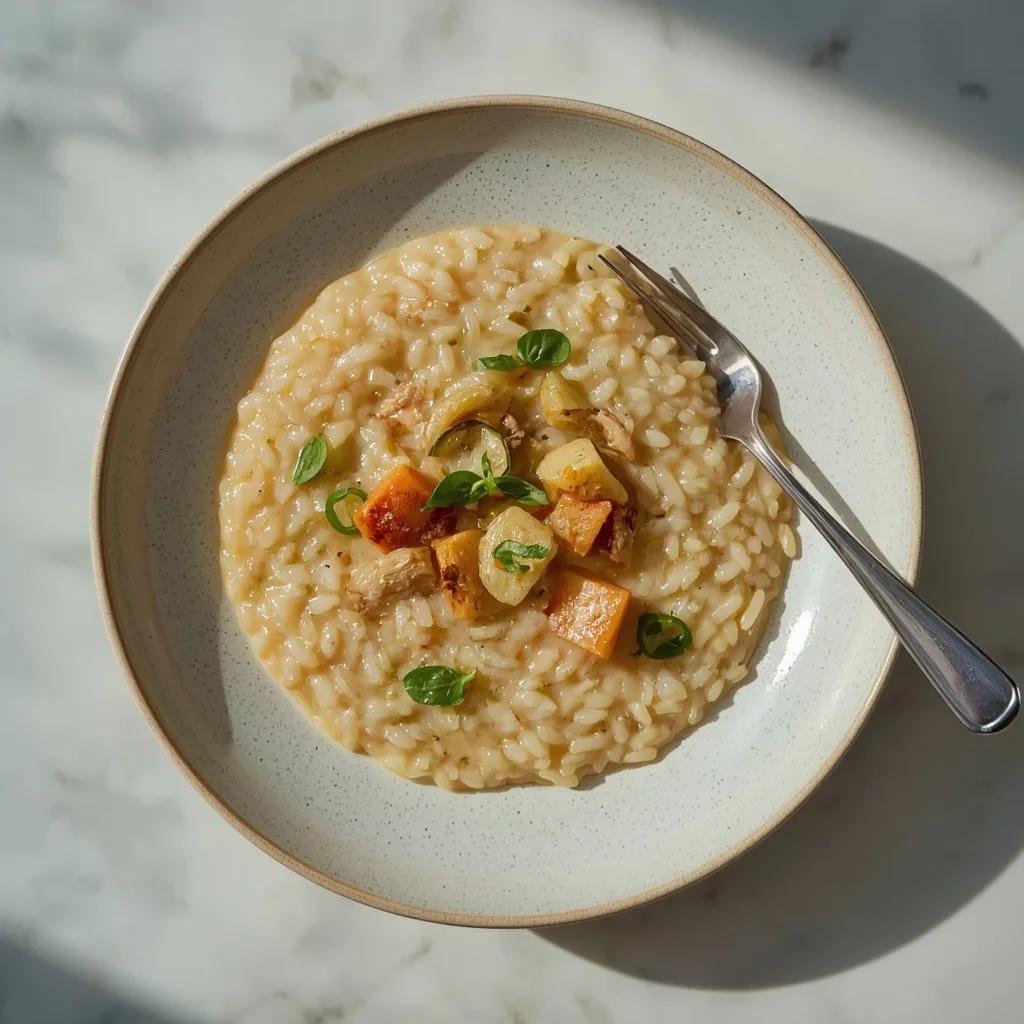
 Giada De Laurentiis Basic Risotto is a masterclass in turning simple pantry ingredients into something luxuriously creamy. It is classic Italian cooking at its most practical — arborio rice, good broth, white wine, butter, and Parmigiano-Reggiano, all coaxed together on the stovetop.
The entire process takes about 45 minutes, and while it demands your attention at the stove, the technique is beginner-friendly. The tricky part is the pacing of the broth additions, but once you feel the rhythm, it becomes second nature. This risotto works as a satisfying main course or an elegant side for four.
What Is Giada De Laurentiis Basic Risotto?
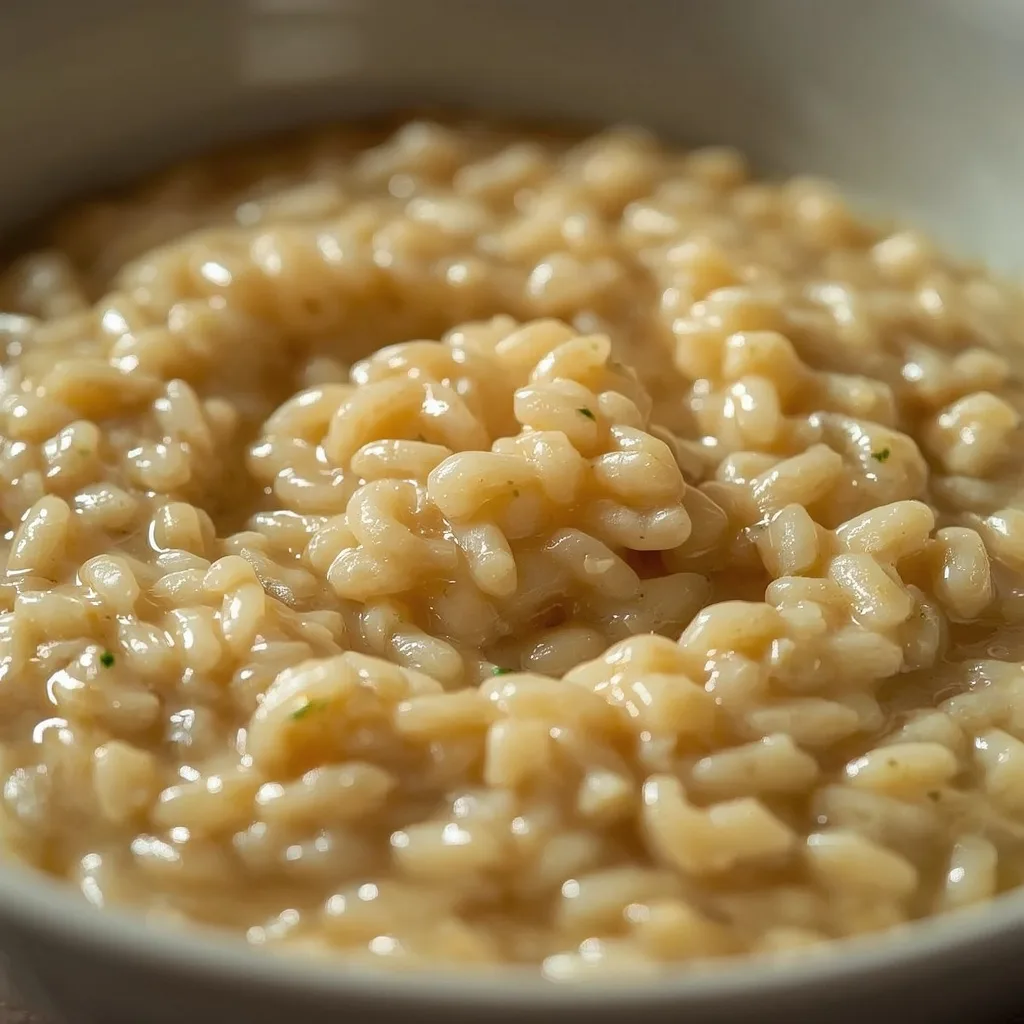
This is a stovetop risotto made with arborio rice, where each grain is slowly cooked by adding warm broth one ladle at a time. The constant stirring releases the rice’s natural starches, creating a velvety, creamy texture without any heavy cream. The final dish is tender but still has a firm “al dente” bite, finished with butter and Parmigiano-Reggiano for richness. It is a foundational recipe from Giada’s cooking repertoire, perfect for weeknights or casual entertaining.
Why This Recipe Works
- Simple technique, reliable results — The method of slowly adding broth and stirring releases starch naturally, producing a creamy texture every time without special equipment.
- No cream needed — The rice and fat do all the work, making this lighter than many creamy dishes while still feeling indulgent and rich.
- One pot, clear steps — Everything happens in a single Dutch oven or heavy pot, and each step builds on the last, so there is no confusion about what to do next.
- Customizable base — Once you master this basic version, you can add vegetables, proteins, or herbs without changing the core technique, making it endlessly adaptable.
- Honest timing — The 35-minute cook time is accurate, and the recipe gives clear visual cues for each stage, so you never have to guess if the rice is ready.
Ingredients You’ll Need
You need just eleven ingredients, most of which you likely already have. Here is what each one does.
The Broth Base
- 5 cups low-sodium chicken broth, preferably homemade — The liquid is the foundation of flavor. Homemade broth gives the best depth, but a good store-bought low-sodium option works fine. Avoid full-sodium broths, as the cheese adds plenty of salt.
- 1/2 cup dry white wine (such as Pinot Grigio or Sauvignon Blanc) — The wine adds acidity that balances the richness of the butter and cheese. Use a wine you would drink — cooking wine is not worth it here.
The Aromatics
- 1/2 cup yellow onion, finely diced — Onion provides a savory base without overpowering the rice. Finely dicing it ensures it melts into the risotto, not chunky bits.
- 2 cloves garlic, minced — Adds fragrance and depth. Garlic burns quickly, so add it just 30 seconds before the rice goes in.
The Rice and Fat
- 1 1/2 cups arborio rice (10 oz) — Arborio is the standard choice for risotto because it has high starch content, which creates the creamy texture. Do not substitute with long-grain or jasmine rice.
- 2 tablespoons unsalted butter — Used for the initial sauté of the onion and rice, giving a rich start to the dish.
- 1 tablespoon olive oil — Mixed with the butter to raise the smoke point and prevent the butter from burning.
The Finishing and Seasoning
- 1/2 cup freshly grated Parmigiano-Reggiano cheese (about 1.5 oz) — Pre-grated cheese from a bag will not melt smoothly. Grate a block of Parmigiano yourself for the best creamy finish.
- 1 tablespoon unsalted butter — Added at the very end for the mantecatura, the final stir that emulsifies everything into a glossy, luxurious texture.
- 1 teaspoon kosher salt, plus more to taste — Salt is added at the end because the cheese is already salty. Taste before adding extra.
- 1/4 teaspoon freshly ground black pepper, plus more for garnish — Black pepper adds a subtle heat that cuts through the richness.
Kitchen Tools You’ll Need
- Large, heavy-bottomed pot or Dutch oven — A heavy-bottomed pot distributes heat evenly, preventing the rice from scorching. A 5- to 6-quart Dutch oven is ideal because it holds all the rice and has room for stirring.
- Medium saucepan — You need this to heat and hold the broth at a gentle simmer while you work through the risotto steps.
- Wooden spoon — A wooden spoon is gentle on the rice and lets you feel the texture as you stir. A silicone spatula also works, but avoid metal spoons that might scratch the pot.
- Ladle — A ladle that holds about 1/2 cup makes adding broth easy and consistent. A measuring cup with a spout can substitute in a pinch.
- Microplane or fine grater — Needed to grate the Parmigiano-Reggiano finely so it melts into the risotto without clumping.
How to Make Giada De Laurentiis Basic Risotto
The entire process takes about 35 minutes on the stovetop, with most of that time spent stirring and adding broth. Here is how it breaks down step by step.
- Warm the broth — In a medium saucepan, bring the chicken broth to a gentle simmer over medium heat. Once simmering, reduce the heat to low and keep the broth hot. Adding cold broth to the rice will slow cooking and disrupt the starch release.
- Sauté the aromatics — In a large, heavy-bottomed pot, melt 2 tablespoons of butter with the olive oil over medium heat. When the butter foams and the foam subsides, add the finely diced onion and cook, stirring frequently, for 4 to 5 minutes until translucent and softened but not browned.
- Add the garlic — Add the minced garlic and stir constantly for 30 seconds until fragrant. Do not let the garlic burn — it will turn bitter and ruin the flavor.
- Toast the rice — Add the arborio rice and stir with a wooden spoon for 1 to 2 minutes. You want the rice grains to be well coated in the fat and the edges to become slightly translucent. This step toasts the rice and enhances its nutty flavor.
- Deglaze with wine — Pour in the white wine and stir constantly until it is fully absorbed by the rice, about 1 to 2 minutes. The alcohol evaporates, but the acidity remains to balance the richness later.
- Start adding broth — Add one ladleful (about 1/2 cup) of the hot broth to the rice and stir gently but continuously until the liquid is almost completely absorbed, about 2 to 3 minutes. The rice should be just barely covered with a thin film of liquid before you add the next ladle.
- Repeat the process — Continue adding the broth one ladleful at a time, waiting until each addition is nearly absorbed before adding the next. Stir frequently but not aggressively — over-stirring can break the grains, while under-stirring may cause sticking. This takes about 18 to 20 minutes total.
- Check for doneness — After about 15 minutes, taste a few grains. The risotto is ready when the rice is tender but still has a slight resistance at the center — an “al dente” bite. You may not need all the broth, or you may need a splash of water if the rice is still firm.
- Finish with butter and cheese — Remove the pot from the heat. Add the remaining 1 tablespoon of butter and the freshly grated Parmigiano-Reggiano. Stir vigorously for about 30 seconds — this final stir, called mantecatura, emulsifies the fat and cheese, creating the signature creamy finish.
- Season and rest — Season with 1 teaspoon kosher salt and 1/4 teaspoon black pepper. Taste and adjust seasoning if needed. Cover the pot and let the risotto rest for 2 minutes. This allows the grains to settle and the starch to fully bind with the liquid.
- Serve immediately — Spoon the risotto into warmed bowls. Garnish with a few cracks of black pepper and an extra dusting of Parmigiano-Reggiano if desired. Risotto waits for no one and will continue to thicken as it cools.
Common Mistakes to Avoid (And How to Fix Them)
- Adding cold broth — Cold broth shocks the rice and slows the cooking process, leading to unevenly cooked grains. Always keep the broth at a gentle simmer on low heat.
- Stirring too aggressively — Over-stirring can break the rice grains, turning the risotto into a mushy paste. Stir gently and consistently instead of fast and hard.
- Rushing the process — Adding broth too quickly or in large amounts prevents the rice from releasing starch properly, resulting in a soupy texture. Wait until each addition is nearly absorbed before adding the next.
- Burning the garlic — Garlic goes from fragrant to bitter in seconds. Add it after the onion is softened and stir constantly for only 30 seconds before adding the rice.
- Skipping the rest — Pouring the risotto directly into bowls without the 2-minute rest can lead to a looser, less creamy texture. The rest helps the starch bind with the liquid for a luscious finish.
- Using pre-grated cheese — Pre-grated Parmigiano contains anti-caking agents that prevent smooth melting. Always grate a block of Parmigiano-Reggiano yourself for the best texture.
Helpful Tips for Perfect Giada De Laurentiis Basic Risotto
- Warm the bowls — Run bowls under hot water and dry them before serving. Cold bowls will cause the risotto to cool and thicken too quickly, robbing it of its creamy texture.
- Taste as you go — Start tasting the rice after about 15 minutes of broth additions. Every batch of rice and broth behaves slightly differently, and your taste is the best judge of doneness.
- Use a wide pot — A wide, heavy-bottomed pot gives the rice more surface area, allowing even heat distribution and preventing hot spots that can stick and burn the bottom layer.
- Keep the broth warm, not boiling — Once the broth simmers, reduce the heat to low. Boiling broth evaporates quickly and can reduce the volume you need, throwing off the liquid-to-rice ratio.
- Do not rinse the rice — Rinsing arborio rice removes the surface starch that is essential for creating the creamy texture. Use the rice straight from the package.
- Stir in one direction — Stirring consistently in one direction helps align the grains and release starch more evenly. It is a small detail that makes a noticeable difference in texture.
- Trust the visual cues — The recipe gives specific signs for each stage — butter foam subsiding, translucent onion, fragrant garlic, translucent rice edges. Watching for these cues means you never need a timer.
Easy Ingredient Substitutions for Giada De Laurentiis Basic Risotto
- Chicken broth → Vegetable broth — Use a good-quality vegetable broth for a vegetarian version. The flavor will be slightly lighter and earthier, but the technique remains unchanged.
- Arborio rice → Carnaroli or Vialone Nano — These Italian rice varieties have even higher starch content and hold their shape better. The cook time may be similar, but check for doneness at the 15-minute mark.
- Dry white wine → Dry vermouth or extra broth — Dry vermouth adds a similar acidity and herbal note. For a non-alcoholic version, use an extra 1/2 cup of broth with a squeeze of lemon juice added at the end.
- Unsalted butter → Olive oil (for the finish) — A high-quality extra-virgin olive oil can replace the finishing butter for a dairy-free version. Add it in the mantecatura step, stirring vigorously for the same creamy effect.
- Parmigiano-Reggiano → Grana Padano or Pecorino Romano — Grana Padano is milder and melts similarly. Pecorino is saltier and sharper, so reduce the added salt. Grate fresh in all cases.
- Yellow onion → Shallot or leek — Shallots give a sweeter, milder flavor. Leeks need to be cleaned thoroughly but add a delicate onion note that works beautifully in risotto.
Easy Ways to Customize Giada De Laurentiis Basic Risotto
- Mushroom risotto — Sauté 8 ounces of sliced cremini or shiitake mushrooms in a separate pan with butter and a pinch of salt until golden. Stir them in just before the mantecatura for an earthy, savory twist.
- Lemon and herb risotto — Add the zest of one lemon and 2 tablespoons of chopped fresh parsley, chives, or basil during the final stirring. The bright citrus cuts through the richness beautifully.
- Spring pea risotto — Stir in 1 cup of frozen peas (thawed) during the last 3 minutes of broth additions. The peas add sweetness and a pop of color without extra prep.
- Saffron risotto — Steep a pinch of saffron threads in 1/4 cup of warm broth for 10 minutes, then add it with your first ladle of broth. Saffron gives the risotto a golden hue and floral, honey-like flavor.
- Roasted vegetable risotto — Toss diced butternut squash, zucchini, or bell peppers in olive oil and roast at 400°F until tender. Fold them into the finished risotto for added texture and flavor.
- Seafood risotto — In the last 5 minutes, stir in 8 ounces of peeled shrimp or bay scallops. They cook quickly in the residual heat, adding protein without extra steps.
Best Ways to Store Giada De Laurentiis Basic Risotto
- Refrigerator in an airtight container — Store leftover risotto in a sealed container for up to 3 days. Press a piece of plastic wrap directly onto the surface before closing the lid to prevent a skin from forming.
- Freezing is not recommended — Freezing causes the creamy texture to become grainy and separate upon thawing. The starch structure breaks down, and the risotto will never regain its original lusciousness.
- Divide into single portions — If you plan to reheat only part of the batch, portion the risotto into individual containers before refrigerating. This prevents reheating the entire batch and then refreezing or wasting leftovers.
- Cool before storing — Let the risotto cool to room temperature for no more than 30 minutes before refrigerating. Leaving it out longer can allow bacteria to grow. Spread it in a thin layer on a baking sheet to cool faster.
Best Ways to Reheat Leftovers
- Stovetop method — Place the risotto in a saucepan over medium-low heat with a splash of broth or water. Stir gently for 3 to 5 minutes until hot throughout. The liquid helps restore the creamy consistency.
- Microwave method — Transfer the risotto to a microwave-safe bowl and cover it. Heat at 50% power in 1-minute intervals, adding a tablespoon of liquid each time and stirring between intervals. Reduced power prevents the rice from drying out or turning gummy.
- Oven method (for larger portions) — Spread the risotto in an oven-safe dish, add a few tablespoons of broth, and cover tightly with foil. Bake at 300°F for 10 to 15 minutes, stirring halfway through. This method is best for reheating a full quart or more.
- Air fryer method is not recommended — Air fryers circulate dry heat that will dry out the rice and make it hard. Stick to stovetop or microwave for reliable results.
Nutritional Breakdown (per serving)
Based on 1 serving = 1 portion out of 4 total.
- Calories: 446
- Protein: 12g
- Fat: 16g
- Carbohydrates: 59g
- Fiber: 1g
- Sugar: 3g
- Sodium: 849mg
FAQs
Can I freeze Giada De Laurentiis Basic Risotto?
Freezing is not recommended. The creamy texture will become grainy and separate upon thawing because the starch structure breaks down. If you must freeze it, portion it into airtight containers, then reheat very gently with extra broth and stir vigorously to try to restore some creaminess, but expect a different texture.
How long does Giada De Laurentiis Basic Risotto last in the fridge?
It keeps for up to 3 days in an airtight container in the refrigerator. Press plastic wrap directly onto the surface before sealing to prevent a skin from forming. After 3 days, the texture degrades noticeably.
Do I have to use arborio rice for this risotto?
Arborio is the most accessible and reliable option, but you can substitute with Carnaroli or Vialone Nano. These Italian varieties have even higher starch content and hold their shape slightly better. Avoid long-grain or jasmine rice, as they do not release enough starch for the creamy texture.
Can I make this risotto dairy-free?
Yes. Replace the butter with a high-quality extra-virgin olive oil for both the initial sauté and the final mantecatura. Use a dairy-free Parmesan alternative or nutritional yeast for the cheesy flavor, though the texture will be slightly less rich. The technique stays exactly the same.
Why is my risotto still hard after 20 minutes?
The rice may need more time or more broth. If the rice feels hard at the center, continue adding warm broth one ladle at a time and cook for another 5 to 10 minutes. Every batch of rice behaves slightly differently depending on age and brand. If you run out of broth, use hot water.
Can I skip the wine in this risotto?
Yes. Replace the 1/2 cup of white wine with an equal amount of extra chicken broth or vegetable broth. To replicate the acidity that balances the richness, add a squeeze of lemon juice or a splash of white wine vinegar at the end, stirring it in during the mantecatura.
Wrapping Up
Giada De Laurentiis Basic Risotto proves that the most impressive dishes often come from the simplest techniques. With nothing more than arborio rice, good broth, and a bit of patience, you get a creamy, satisfying meal that feels special without any fuss. Give it a try — the first bite will make every stir worth it.
PrintGiada De Laurentiis Basic Risotto
This classic Italian risotto is creamy and luscious, with each grain of arborio rice maintaining a tender yet firm bite. The slow addition of warm broth and constant stirring coax out the rice’s natural starches, creating a velvety texture without heavy cream. Finished with butter and Parmigiano-Reggiano, it’s a simple, elegant side or a satisfying main course.
- Prep Time: 10
- Cook Time: 35
- Total Time: 45
- Yield: 4 1x
- Category: Main Course
- Method: Stovetop
- Cuisine: Italian
Ingredients
- 5 cups low-sodium chicken broth, preferably homemade
- 2 tablespoons unsalted butter
- 1 tablespoon olive oil
- 1/2 cup yellow onion, finely diced
- 2 cloves garlic, minced
- 1 1/2 cups arborio rice (10 oz)
- 1/2 cup dry white wine (such as Pinot Grigio or Sauvignon Blanc)
- 1/2 cup freshly grated Parmigiano-Reggiano cheese (about 1.5 oz)
- 1 tablespoon unsalted butter (for finishing)
- 1 teaspoon kosher salt, plus more to taste
- 1/4 teaspoon freshly ground black pepper, plus more for garnish
Instructions
- In a medium saucepan, bring the chicken broth to a gentle simmer over medium heat. Once simmering, reduce the heat to low and keep the broth hot — adding cold broth to the rice will slow cooking and disrupt starch release.
- In a large, heavy-bottomed pot or Dutch oven, melt 2 tablespoons of butter with the olive oil over medium heat. When the butter foams and the foam subsides, the fat is ready.
- Add the finely diced onion and cook, stirring frequently, for 4 to 5 minutes until the onion is translucent and softened but not browned. If the onion starts to color, reduce the heat slightly.
- Add the minced garlic and cook, stirring constantly, for 30 seconds until fragrant. Do not let the garlic burn, as it will turn bitter.
- Add the arborio rice and stir with a wooden spoon for 1 to 2 minutes, until the rice grains are well coated in the fat and the edges become slightly translucent. This toasts the rice, enhancing its nutty flavor and preparing it to absorb liquid without becoming mushy.
- Pour in the white wine and stir constantly until the wine is fully absorbed by the rice, about 1 to 2 minutes. The alcohol will evaporate, leaving behind acidity that balances the richness.
- Add one ladleful (about 1/2 cup) of the hot broth to the rice and stir gently but continuously until the liquid is almost completely absorbed, about 2 to 3 minutes. The rice should be just barely covered with a thin film of liquid before you add the next ladle.
- Continue adding the broth one ladleful at a time, waiting until each addition is nearly absorbed before adding the next. Stir frequently but not aggressively — over-stirring can break the grains, while under-stirring may cause sticking or uneven cooking. The process should take about 18 to 20 minutes total.
- After about 15 minutes, taste a few grains of rice. The risotto is ready when the rice is tender but still has a slight resistance at the center — an “al dente” bite. You may not need all the broth, or you may need a splash of water if the rice is still firm.
- Remove the pot from the heat. Add the remaining 1 tablespoon of butter and the freshly grated Parmigiano-Reggiano. Stir vigorously for about 30 seconds to combine — this final stir, called mantecatura, emulsifies the fat and cheese, creating the signature creamy finish.
- Season with 1 teaspoon kosher salt and 1/4 teaspoon black pepper. Taste and adjust seasoning if needed — the cheese adds saltiness, so add salt incrementally.
- Cover the pot and let the risotto rest for 2 minutes. This allows the grains to settle and the starch to fully bind with the liquid, ensuring a perfectly luscious texture.
- Spoon the risotto into warmed bowls. Garnish with a few cracks of black pepper and an extra dusting of Parmigiano-Reggiano if desired. Serve immediately — risotto waits for no one and will continue to thicken as it cools.
Notes
Storage: Refrigerate leftover risotto in an airtight container for up to 3 days. Freezing is not recommended, as the creamy texture will become grainy and separate upon thawing. Reheating: To restore creaminess, place the risotto in a saucepan over medium-low heat with a splash of broth or water. Stir gently for 3 to 5 minutes until hot throughout. Alternatively, reheat in a microwave-safe bowl, covered, at 50% power in 1-minute intervals, adding a tablespoon of liquid each time and stirring between intervals.
Nutrition
- Calories: 446
- Sugar: 3g
- Sodium: 849mg
- Saturated Fat: 8g
- Carbohydrates: 59g
- Fiber: 1g
- Protein: 12g
- Cholesterol: 34mg
Keywords: risotto, basic risotto, Giada De Laurentiis, Italian risotto, arborio rice, creamy rice, Parmesan risotto, stovetop risotto, Italian main course, mushroom risotto